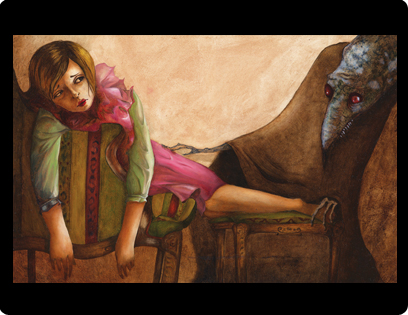
Amazing Coincidence

how it could be happened?...

INTERESTING FACTS YOU DIDN'T KNOW ABOUT DREAMS

Dreaming is one of the most mysterious experiences in our lives but what do we actually know about dreams? Here are some interesting facts that you probably didn't know...

SOFTWARE TO PREDICT 'MARCH MADNESS' BASKETBALL WINNER

Fine, computers, you can beat us at chess and Jeopardy!, just please let us keep March Madness. With the US National Collegiate Athletic Association's basketball tournament starting today, contestants...

STMIK AMIKOM

STMIK AMIKOM is a private university in Yogyakarta, Indonesia. STMIK is a kind of STMIK AMIKOM is a private university in Yogyakarta, Indonesia. STMIK is a kind...

THE TOP 10 MOST INFLUENTIAL PEOPLE ONLINE

Who controls the Internet? For all the talk about how the Internet levels the playing field and gives anyone the chance to become an influence in society and business, many of those...

Showing posts with label Uncategorized. Show all posts

Wednesday, April 20, 2011

Diana, Princess of Wales inspires Monica Ali's latest novel


A lot has happened since Diana was killed in a Paris car crash in 1997. The twin towers fell, the euro was born, the Good Friday agreement was signed and media interest in her death meant the princess was seldom off the front pages for long.
But what if the princess had not died? Step forward Monica Ali, whose new book aims to fill the gap.
Seven years ago Ali enraged Bangladeshi elders in the East End of London with her debut novel, Brick Lane. Her new novel, Untold Story, depicts the ups and downs of a fictional princess whose life trajectory bears more than a passing resemblance to that of Diana. The 43-year-old author confirmed that the work had been strongly influenced by the late Princess of Wales, and includes "a drama involving a member of the paparazzi".
She told the Guardian she had always been intrigued by Diana. "Over the years I've sometimes found myself wondering, if the accident had never happened, how would she have emerged from that period in which she seemed to be at some kind of crossroads? How would she have matured into her 40s and beyond?
"What I always admired about her was the way she refused to be told what to do. She stuck two fingers up at the establishment, she took risks, she was a gorgeous bundle of trouble."
Ali delivered the first draft to her publishers, Transworld, last July. It is now in the final stages of editing, with publication planned for the end of March – just a month before the wedding of Prince William and Kate Middleton.
The timing was a coincidence, Ali said today. "At first, I thought it was unfortunate timing – I'd delivered the first draft last summer, before the engagement had been announced. But then I thought about all the negative things that have been written about Diana in the press and in non-fiction books over the years. That's all the stuff that might be hard for her sons," she told the Daily Mail.
Clarence House declined to comment on the book.
Ali stressed that the book was not simply a sequel to Diana's life. "I did my research but it's a work of fiction. It's primarily about identity, which is what I always write about.
"And it's about family and friendship, and the peculiar calamity of fame," she said.
It is not the first time that Diana's life has been fictionalised. She appeared as a character in Andrew O'Hagan's novel Personality, and was a looming presence in The Little White Car, a comic novel written by the Granta novelist Dan Rhodes under the pen name Danuta de Rhodes, in which Veronique, a young Parisian, prangs her parents' car in the accident that killed Diana.


Via: http://www.guardian.co.uk

Saturday, March 19, 2011

STMIK AMIKOM

STMIK AMIKOM is a private university in Yogyakarta, Indonesia. STMIK is a kind of
'academy' in the four-tier post-secondary system of universities, institutes, academies
and polytechnics. STMIK stands for 'schools for technology, management, information
and computers'. The academy concentrates on innovative technologies. It has an
enrolment of more than 7,600 students, which compares strongly with nearby
institutions that are closing because of a shortage of students. The academy produces
graduates who are very popular in the labour market. The academy also runs several
commercial enterprises: television channels, radio channels, cartoon production,
software design, internet services, advertising, computer systems, consultancy and
mobile networks. These commercial setups also provide valuable ground for student
internships. The academy claims to produce 'graduates with global qualities,
productive, entrepreneurial, professionals, especially in knowledge based on
computer and informatics

Interesting Facts You Didn't Know About Dreams


Dreaming is one of the most mysterious experiences in our lives. The content and purpose of dreams are not yet understood, though they have been a topic of speculation and interest throughout recorded history. But what do we actually know about dreams? Here are some interesting simple facts that you probably didn't know. 


     1. You Forget  90% of Your Dreams


 Within 5 minutes of waking, half of your dream if forgotten. Within 10 minutes, 90% is gone. The famous poet, Samuel Taylor Coleridge, woke one morning having had a fantastic dream, he put pen to paper and began to describe his “vision in a dream” in what has become one of English's most famous poems: Kubla Khan. 


     2.  Men and Women Dream Differently
Every human being dreams but men and women have different dreams and different physical reactions. Men tend to dream more about other men, while women tend to dream equally about men and women. In addition, both men and women experience sexually related physical reactions to their dreams regardless of whether the dream is sexual in nature; males experience erections and females experience increased vaginal blood flow.


      3. You Can Experience an 0rgasm in Your Dream
 
You can not only have s e x as pleasurable as in your real life while dreaming, but also experience an o r g a s m as strong as a real one without any wet results. The sensations felt while lucid dreaming can be as pleasurable and strong as the sensations experienced in the real world. 


     4.  We Only Dream of What We Know
Our dreams are frequently full of strangers who play out certain parts – did you know that your mind is not inventing those faces – they are real faces of real people that you have seen during your life but may not know or remember? We have all seen hundreds of thousands of faces through our lives, so we have an endless supply of characters for our brain to utilize during our dreams.


       5. Not Everybody Dreams in Color

full 12% of sighted people dream exclusively in black and white. The remaining number dream in full color. Studies from 1915 through to the 1950s maintained that the majority of dreams were in black and white, but these results began to change in the 1960s. Today only 4.4% of the dreams of under-25 year-olds are in black and white. Recent research has suggested that those changing results may be linked to the switch from black-and-white film and TV to color media.


       6. Dreams Prevent Psychosis


In a recent sleep study, students who were awakened at the beginning of each dream, but still allowed their 8 hours of sleep, all experienced difficulty in concentration, irritability, hallucinations, and signs of psychosis after only 3 days. When finally allowed their REM sleep the student's brains made up for lost time by greatly increasing the percentage of sleep spent in the REM stage.


        7. Animals Dream Too


Studies have been done on many different animals, and they all show the same brain waves during dreaming sleep as humans. Watch a dog sleeping sometime. The paws move like they are running and they make yipping sounds as if they are chasing something in a dream.


          8. Body Paralysis

During REM sleep the body is paralyzed by a mechanism in the brain in order to prevent the movements which occur in the dream from causing the physical body to move. However, it is possible for this mechanism to be triggered before, during, or after normal sleep while the brain awakens. 


       9. Dream Incorporation


Our mind interprets the external stimuli that our senses are bombarded with when we are asleep and make them a part of our dreams. This means that sometimes in our dreams we hear a sound from reality and incorporate it in a way. For example you may be dreaming that you are in a concert while your brother is playing a guitar during your sleep. 


        10. Precognitive Dreams
Results of several surveys across large population sets indicate that between 18% and 38% of people have experienced at least one precognitive dream and 70% have experienced déjà vu. The percentage of persons that believe precognitive dreaming is possible is even higher – ranging from 63% to 98%.


       11. If You Are Snoring, Then You Can Not be Dreaming

This fact is repeated all over the Internet, but I'm a bit suspicious whether it's really true as I haven't found any scientific evidence to support it.

Note: Rapid eye movement (REM) sleep is a normal stage of sleep characterized by rapid movements of the eyes. REM sleep in adult humans typically occupies 20-25% of total sleep, about 90-120 minutes of a night's sleep) 

from: http://www.mediadump.com